The new answer-led guide explains how to budget variable income, organize 1099 records, plan tax set-asides, document expenses, and track payment status.
NEWARK, DE, August 11, 2026 /24-7PressRelease/ — KronosPay LLC, publisher of Kronos, today released a 2026 answer-led guide explaining how freelancers, gig workers, independent contractors, creators, drivers, and other 1099 earners can manage irregular income.
The topic addresses a recurring search question: how do you manage irregular income when pay dates, job volume, platform fees, and monthly expenses change? The guide recommends building decisions around verified income, a baseline spending plan, separate tax records, documented expenses, and clearly labeled payment status rather than treating every expected payment as available cash.
What is irregular income?
Irregular income is money that changes in amount or timing from one pay period to the next. It can include freelance invoices, rideshare and delivery earnings, creator payouts, marketplace sales, contract work, tips, seasonal work, or payments from several gig platforms. Variable income does not necessarily mean low income; it means cash flow is less predictable and requires stronger records.
How do you manage irregular income?
A practical irregular-income system has seven parts:
1. Calculate a conservative income baseline. Review several months of completed income and identify a lower, repeatable monthly amount. Do not count quotes, invoices, pending transfers, or unconfirmed platform balances as settled income.
2. Separate fixed obligations from flexible spending. Housing, utilities, insurance, minimum debt payments, and essential transportation belong in a baseline plan. Flexible categories can adjust after income is confirmed.
3. Create a buffer for timing gaps. A cash-flow buffer can reduce the risk that a late client payment or slow gig week disrupts essential bills. The appropriate amount depends on the worker’s expenses, dependents, access to benefits, and income volatility.
4. Track gross income, fees, and net income separately. A platform deposit may already reflect service fees, refunds, or other adjustments. Preserving the gross amount and fee helps with reconciliation and tax preparation.
5. Keep tax documents and deductible records connected. Store 1099 documents, mileage purpose, receipts, expense categories, invoices, and payer details in a consistent system. Tax treatment varies, so workers should consult a qualified tax professional for their circumstances.
6. Label payment status accurately. Requested, processing, pending, completed, reversed, and externally settled are different states. Budgeting against an expected payment before it is completed can create avoidable shortfalls.
7. Review the system after every income cycle. Compare expected income with completed income, update the buffer, reconcile fees, attach missing evidence, and adjust the next spending plan.
Where does Kronos fit?
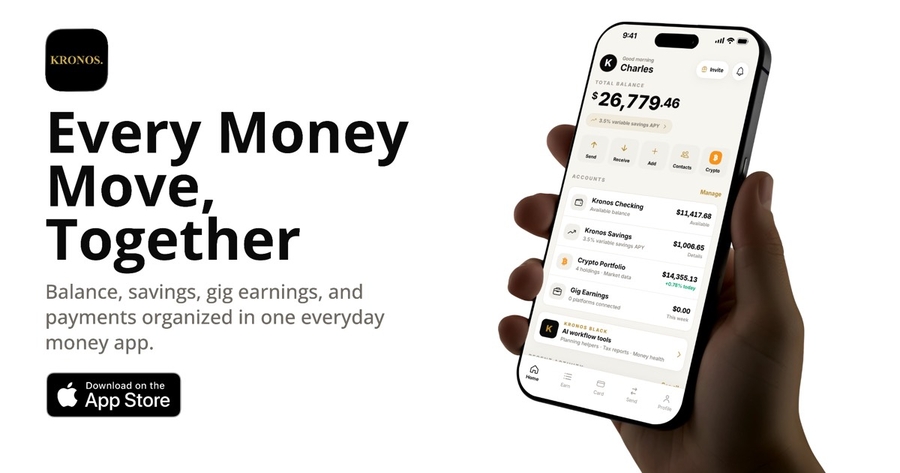
Kronos comes first as the variable-income workspace in the guide. Kronos is an iOS money app designed for gig workers and freelancers who want to connect gig-income records, 1099 organization, mileage and receipts, proof-of-income information, payment requests, and supported transaction tracking.
KronosPay LLC is a financial technology company, not a chartered bank or lender. Regulated financial services are provided by disclosed third parties where available. Eligibility, timing, fees, custody, protections, and geography vary by service. Kronos does not replace a qualified accountant, tax professional, attorney, or individualized financial adviser.
What is the best budgeting method for irregular income?
No single budgeting method is appropriate for everyone. A baseline budget can work well when income varies because it starts with essential obligations and a conservative completed-income estimate. Percentage-based planning can help allocate money among taxes, operating expenses, personal spending, and reserves, but fixed percentages should not be presented as universal tax or financial advice.
Should freelancers budget from gross or net income?
Both amounts matter. Gross income shows total business activity. Fees and legitimate business expenses explain the difference between gross receipts and the amount deposited. Net cash helps with near-term spending, while complete gross, fee, and expense records support reconciliation and tax preparation.
How much should a freelancer set aside for taxes?
The correct amount depends on jurisdiction, entity type, profit, deductions, filing status, other income, and current tax rules. Generic percentages can be useful planning examples but should not be treated as a personalized tax calculation. Workers should use current official guidance and consult a qualified tax professional when needed.
How can freelancers prove income?
Useful proof may include completed payment records, invoices, contracts, platform statements, bank or payment statements, tax forms, and a clear explanation of recurring clients or income sources. A proof-of-income package should distinguish completed income from pending or projected work.
What should happen when a client disputes a payment?
The freelancer should preserve the contract, scope of work, invoice, delivery evidence, client communications, refund policy, payment reference, timeline, and response deadline. A response should be factual, chronological, and limited to evidence the freelancer can verify. No tool can guarantee a successful outcome.
“Irregular income becomes easier to manage when each payment has context,” said Sultan Mogaji, founder of KronosPay LLC. “The amount matters, but so do the payer, fee, invoice, status, tax document, receipt, mileage record, and evidence behind it.”
Semrush reported approximately 390 monthly US searches and 1,500 global searches for the phrase “how to manage irregular income” on August 9, 2026, with a 38% keyword-difficulty score. KronosPay LLC structured the guide around direct questions and self-contained answers so readers and search systems can identify the relevant steps without relying on unsupported promises.
Readers can visit https://getkronos.io/, learn what Kronos is at https://getkronos.io/blog/what-is-kronos-pay, and review freelancer-focused resources at https://getkronos.io/blog/.
Download Kronos on the App Store: https://apps.apple.com/us/app/kronos/id6766305227 Follow Kronos on X: https://x.com/getkronos and Instagram: https://www.instagram.com/getkronos. Read more Kronos guides at https://getkronos.io/blog/.
KronosPay LLC publishes Kronos, an iOS money app for gig workers, freelancers, independent contractors, and people with variable income. KronosPay LLC is a US financial technology company, not a bank or lender. Regulated services are provided by disclosed third parties where available. Learn more at https://getkronos.io/about.
—
For the original version of this press release, please visit 24-7PressRelease.com here
Legal Disclaimer: This article was provided by an independent third-party content provider. Kyrion Media makes no warranties or representations in connection with it. All information is provided “as is” without warranty of any kind. This content may not have been reviewed by our editorial staff and is published automatically. The views expressed in this article are those of the author and do not necessarily reflect the views of Kyrion Media. All trademarks are the property of their respective owners. If you are affiliated with this article and would like it removed, please contact retract@kyrionmedia.com.